Your cedar fence looked great the day it went up. After a couple of Western New York winters, with the freeze-thaw cycles, lake-effect snow, and rain, that cedar fence starts to tell a different story: the wood grays out, the surface opens up, and moisture gets in where it should not. Picking the best stain for cedar fence boards in Clarence before that happens is one of the smartest ways to protect that investment.
Key Takeaways
- Cedar’s natural oils make it durable, but UV and moisture still break it down without stain protection.
- Oil-based stains penetrate deeper into cedar and last longer than water-based options.
- Semi-transparent stains are the most widely recommended for cedar; they protect the wood while keeping the grain visible.
- WNY’s freeze-thaw cycles put unique stress on cedar that makes the right stain choice even more important.
- Proper prep, cleaning and drying the wood, matters as much as the stain itself.
- A well-maintained cedar fence in Western New York can last 15 to 25 years with the right care.

Why Your Cedar Fence Needs Protection in Clarence
Cedar is naturally strong. It contains oils that resist decay and insect damage, which is part of why homeowners choose it for fencing. But those oils do not make it immune to the elements.
Ultraviolet rays break down the wood’s lignin, so the surface deteriorates and turns gray, and out here in Erie County the weather adds pressure. Water soaks into the grain during a thaw, then freezes and expands as temperatures drop, and repeating that over a few seasons creates cracks, warping, and rot. Staining every 2 to 3 years protects against moisture, UV, and those freeze-thaw cycles.
The right stain creates a real barrier between your cedar and all of that. Quality stains penetrate the wood fibers rather than just coating the surface, so the wood can breathe while repelling water.
The 3 Types of Cedar Fence Stain
Before comparing products, it helps to know what you are choosing between. Cedar fence stains fall into three categories based on how much grain shows through.
Transparent Stains
A transparent stain highlights cedar’s natural grain and works best on new wood with minimal UV exposure. It lets the wood age naturally while adding a soft tint, but it offers the least UV and moisture protection. For Clarence, this is usually the weakest choice, since you will reapply every season or two and it will not stop the graying.
Semi-Transparent Stains
A semi-transparent stain is the most common pick for cedar. It adds enough color to enhance the wood while keeping some grain visible, with better UV and moisture resistance than transparent options. Its UV inhibitors help prevent graying, which is why most homeowners who want cedar to look like cedar focus here.
Solid Stains
Solid stains cover the grain completely and give the most consistent color. They can last 4 to 5 years versus the 2 to 3 years typical of transparent and semi-transparent stains. The trade-off is commitment: going back to a semi-transparent look later means stripping the old finish first. For a fuller comparison of film-forming versus penetrating finishes, see deck stain versus deck paint.
Oil-Based vs. Water-Based Stain for Cedar: Why Oil Usually Wins
This is where many homeowners slip up. Cedar’s chemical makeup affects how stain absorbs, and grabbing whatever is on the shelf can backfire. When homeowners ask which is the best stain for cedar fence boards, the answer usually points to oil.
Cedar’s natural oils can keep water-based stains from absorbing evenly, so an oil-based stain is usually the better fit. Oil-based formulas use petroleum-based solvents that carry pigment and protective compounds deep into the fibers, giving longer-lasting protection that often holds 3 to 5 years. They also perform well in harsh climates with big temperature swings and strong UV.
Water-based stains tend to sit on the surface, which means quicker wear and more frequent recoating. There is also a temperature factor for the shoulder seasons: oil-based stains can go on in conditions as cool as 40°F, while water-based products usually need 50°F minimum and struggle if it drops below 40°F before curing. That flexibility matters when you are racing the cold in September or October.
4 Qualities That Define the Best Stain for Cedar Fence Boards
Whatever product you pick, four qualities separate a stain worth buying from one that wastes your money.
1. Deep penetration. The best stains soak into the grain rather than sitting on top, strengthening the fibers while letting interior moisture escape and keeping rain and snow out.
2. UV blockers. Without UV protection, even a freshly stained fence starts to gray, so look for UV inhibitors listed in the formula, not just a marketing note.
3. Mildew and mold resistance. This matters in a climate like ours with extended wet spells in spring and fall, since mildew deteriorates wood and can cause health issues.
4. Water repellency. This is what actually stops the freeze-thaw damage cycle by keeping water out of the grain.
One more thing worth knowing: the EPA registers specific fungicide compounds for preserving above-ground wood like fences, decking, and railings. Stains and stain-sealers with registered mildewcides, listed in the EPA overview of wood preservative chemicals, have met federal safety and efficacy standards.
Stain Categories Worth Looking at for Cedar Fences
These are not rankings. A few categories consistently come up when you are hunting for the best stain for cedar fence boards, and the right one depends on your fence’s age, condition, and how much grain you want visible.
For new cedar: an oil-based semi-transparent stain penetrates well, shows the grain, and holds up through multiple seasons without peeling.
For fences that have started to gray: a semi-transparent with stronger pigment keeps some grain visible while buying more time between coats, typically 2 to 3 years with proper prep.
For older fences with visible wear: a semi-solid or solid stain evens out uneven color and weathering with consistent coverage.
For one-and-done protection: a combination stain-and-sealer delivers color, UV protection, water repellency, and mildew resistance in a single application, a good fit if you would rather not think about it for a few years.
When to Stain, and a Timing Mistake to Avoid
If your cedar fence is brand new, hold off before staining. Applying too soon can trap moisture and cause mold, rot, or poor adhesion, so wait about 4 to 8 weeks after installation for the wood to dry and settle.
The easiest readiness check is the water bead test: sprinkle water on the surface, and if it beads up the wood is still too wet, while if it soaks in the stain will adhere better.
For existing fences, the Clarence window runs from late spring through early fall, when temperatures stay above 50°F and you have a 2 to 3 day dry stretch in the forecast. Early morning or late afternoon is best, so direct sun is not pulling the stain before it absorbs.
How Often Does a Cedar Fence Need Re-Staining in WNY?
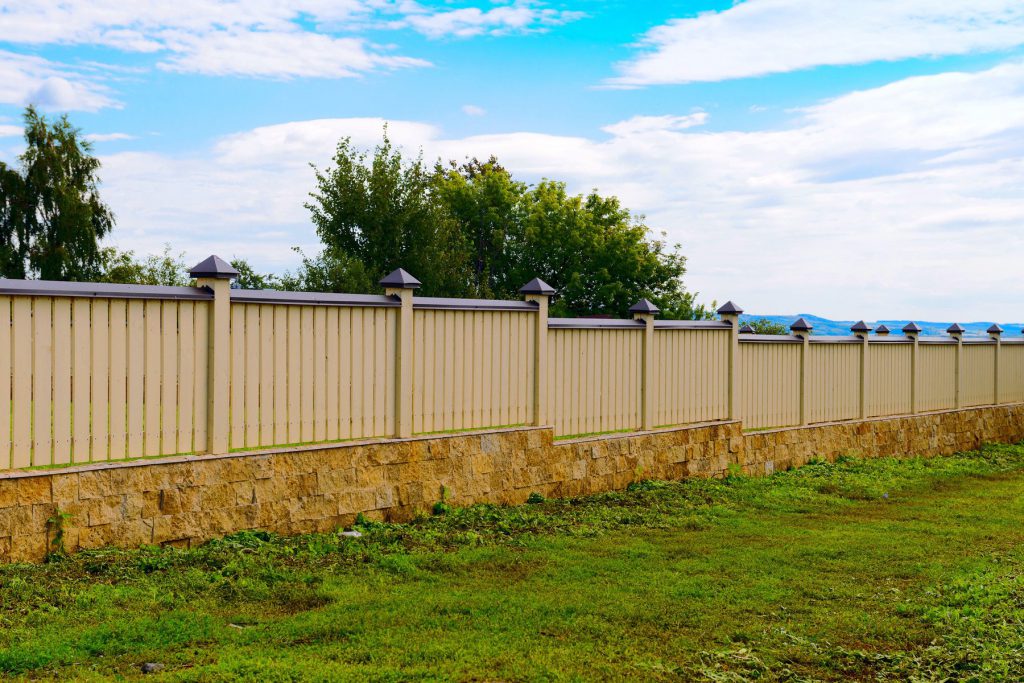
Plan on every 2 to 3 years for semi-transparent and transparent stains in our climate, and 4 to 5 years for some solid stains. Even the best stain for cedar fence boards needs periodic upkeep to hold its protection. Inspect the fence once a year for water absorption, fading, or mildew, and recoat when the wood stops beading water.
The Prep Step Most Homeowners Skip
The biggest factor in how long a fence stain lasts is surface prep. Cleaning with a deck cleaner and following with a wood brightener opens the grain so the stain can penetrate fully, and skipping that step is the most common reason stain fails early.
That means pressure washing or hand-scrubbing off dirt, mold, and old buildup before you open a can. If the old finish is intact and you are reusing the same product, a light wash is often enough; if you are switching products or the finish has broken down, you may need a brightener or stripper first.
Should You Stain It Yourself or Bring in a Pro?
That depends on the size of the fence, the condition of the wood, and how much time you want to commit. For cedar, the key is getting the prep right, choosing the right product, and applying it evenly without puddling or lap marks.
For Clarence homeowners who would rather know it is done right the first time, a professional application makes a real difference, both in finish quality and in how long it holds up through our winters. See our professional fence staining services to understand what that involves.
Ready to Protect Your Cedar Fence Before the Next WNY Winter?
If you are a Clarence homeowner with a cedar fence that needs staining, or one already showing its age, Advantage Paint Services can help you choose the right product and apply it correctly. As local cedar fence staining experts, we serve Clarence, Amherst, Williamsville, Hamburg, Orchard Park, and the greater Buffalo area.
Call 716-477-3966 for a FREE estimate today.