Hiring exterior commercial painters is one of the bigger decisions a building owner makes. But not all painters deliver the same results, and exterior commercial painting problems are often the reason why.
Paint fails. It peels, bubbles, fades, and cracks. When that happens, you are looking at a building that signals neglect to tenants, visitors, and anyone driving past. You are also looking at a repair bill that was not in the budget. Most of these failures do not come out of nowhere. They trace back to a short list of common mistakes made before or during the job.
This post covers seven of the most common exterior commercial painting problems. You will learn what causes each one, how to spot the warning signs, and what to ask any contractor before the job starts.
Key Takeaways:

1. Skipping Proper Surface Preparation
Bad prep work sits behind more paint failures than any other factor. When a crew skips pressure washing, sanding, or priming, the new paint does not bond to the surface properly. It starts to peel or chip within months.
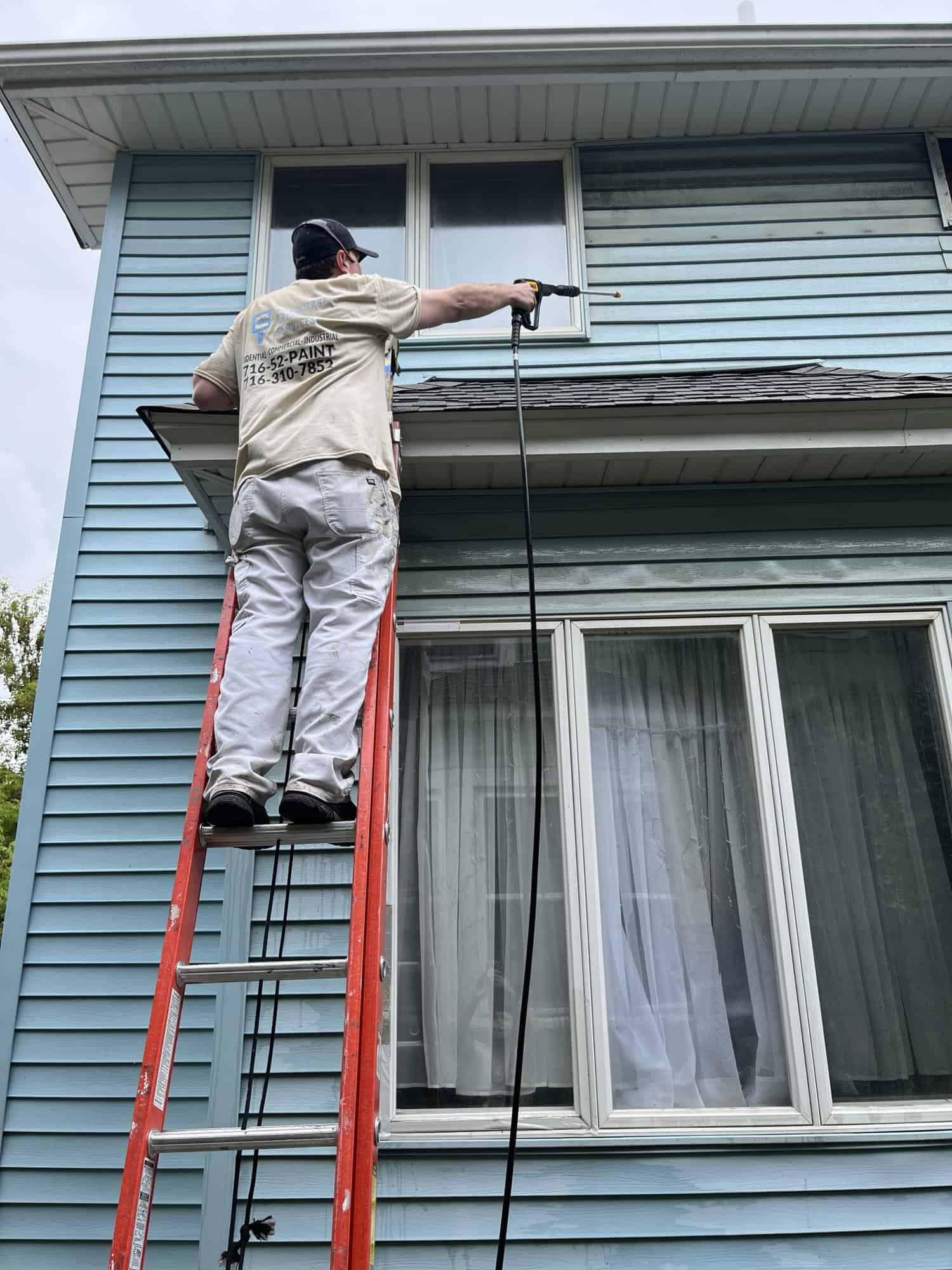
The process matters. Before exterior commercial painters start any job, they should clean every surface to remove dirt, grease, chalk, and old loose paint. The crew should patch and sand any surface damage. Bare areas need a primer coat before any topcoat goes on. Each of these steps takes time, and some contractors skip them to move faster and keep costs down. That decision usually shows up later as an early paint failure.
Before you hire anyone, ask them to walk you through their prep process. A contractor who is not willing to explain their steps is worth pausing on.
What to look for: Paint that peels at edges or corners within the first year is often a prep issue, not a product issue.
2. Using the Wrong Paint Product
Not every paint works on every surface. Concrete, wood, metal, and stucco each need a different type of coating. Using a product that does not match the surface leads to faster breakdown, no matter how well the crew applies it.
When exterior commercial painters are not specific about their product choices, that is a sign to ask more questions. Ask them for the product data sheet for every coating they plan to use. That sheet will tell you the surface the product covers, the expected lifespan under normal conditions, and the temperature and humidity ranges the product needs during application. If a contractor cannot produce that document, they may not be using a product that fits your building.
The right product for the right surface, applied correctly, is one of the biggest factors in how long your paint job lasts.
3. Painting in the Wrong Weather Conditions
Temperature and humidity affect how paint bonds and cures. Most quality exterior paints need air temperatures between 50 and 90 degrees Fahrenheit and low humidity to dry and cure properly. Paint applied outside those conditions does not bond as well. It is more likely to crack, bubble, or peel within the first season.
One of the most overlooked exterior commercial painting problems is weather timing. Some contractors push through bad weather to stay on schedule. A reliable contractor will monitor forecasts and shift the schedule when conditions are off, even if that means a short delay.
Ask how your contractor handles weather holds. If they have no process for tracking conditions, that is worth knowing before you sign anything.

4. Leaving Out the Primer
Primer is not optional on a commercial exterior. It seals the surface, blocks stains, and gives the topcoat something solid to grip. When exterior commercial painters skip primer to cut time or cost, the topcoat does not grip as well. The result is faster fading and more chipping, often within the first year.
This is one of the easier exterior commercial painting problems to prevent. Ask any contractor if they include primer and whether they list it as a separate line item. If it does not appear in the written scope of work, do not assume the crew will include it.
5. Not Applying Enough Coats
One coat of paint on a commercial exterior is rarely enough. Most quality jobs require a primer coat followed by at least two topcoats. A single topcoat stretches thin, especially on textured or porous surfaces, and it fails sooner as a result.
Ask your exterior commercial painters how many coats they include in the quote. If the price looks lower than expected, coat count is often the reason. A cheaper job with fewer coats will likely need a repaint sooner, and that second job will cost more than the money saved on the first one.
6. Skipping Caulking and Sealing
Gaps around windows, doors, trim, and wall penetrations are where moisture gets in. When exterior commercial painters skip caulking these spots, water works its way behind the paint film over time. The paint then bubbles and peels from the inside out, which is harder to fix than surface peeling.
A complete paint job includes caulking every gap and penetration before the crew applies any paint. Check your written scope of work to make sure caulking appears as a specific step. If it is not there, ask for it before you sign.
7. Starting Without a Written Scope of Work
This one causes more disputes than any other exterior commercial painting problem. Without a written agreement, you and your contractor may have very different ideas about what the job covers. Arguments come up over prep steps, coat counts, product brands, paint colors, site cleanup, and project timelines.
Before any exterior commercial painters start work, get the full scope in writing. The document should list every surface the crew will paint, the specific products they will use, the number of coats, the prep steps they will follow, and a clear project timeline. Getting this in writing protects both parties and sets clear expectations before work begins.
A contractor who pushes back on writing down the details is showing you something about how they work.
How to Avoid These Exterior Commercial Painting Problems
These exterior commercial painting problems are common, but they are also preventable. Here is a simple process to follow before you hire anyone:
- Get everything in writing before you sign anything.
- Ask for product data sheets for every coating your contractor plans to use.
- Confirm the prep process includes pressure washing, patching, sanding, and priming.
- Check that the quote lists at least two topcoats over primer.
- Look for caulking as a line item in the scope, not an afterthought.
- Ask how your contractor handles weather holds.
A good contractor will have a clear answer for each of these points. Most paint failures come down to skipped steps. The right contractor will walk you through every detail before a brush touches your building.
Want a Paint Job That Holds Up?
Exterior commercial painting problems are expensive to fix after the fact. But when you work with exterior commercial painters who follow a clear process, use the right products, and document everything before work starts, those problems rarely come up.
Advantage Paint Services works with building owners who want a clean, lasting result the first time. No shortcuts. No surprise callbacks six months later. Call 716-477-3966 today and ask about our exterior painting process. We will walk you through every step before any work begins.