How long does exterior paint take to dry? The answer depends on the exact coating, surface, temperature, humidity, airflow, and weather after application. A finish can feel dry to the touch before it is ready for another coat, rain, cleaning, or full service.
In Clarence and across Western New York, we plan exterior painting around both the forecast and the product data sheet. That is the safer way to decide when the next coat can go on and when a newly painted surface is ready for normal exposure.
Dry to Touch, Ready to Recoat, and Fully Cured Are Different
Dry to touch means the surface is no longer wet enough to transfer easily from light contact. It does not mean the coating has reached its final hardness.
Recoat time is the manufacturer’s stated point when another coat can be applied under the listed conditions. Full cure comes later, after the coating has continued hardening.
That difference matters because a surface can look finished while the coating is still more sensitive to moisture, pressure, cleaning, or abrasion.
How Long Does Exterior Paint Take to Dry?
There is no single exterior paint drying time that applies to every product. The technical data sheet for the exact coating should control the schedule.
As one current example, Benjamin Moore Element Guard Exterior Paint currently lists a 1-hour dry time, a 4-hour recoat time, and a 14-day full cure for that specific product. Benjamin Moore also states that Element Guard can resist rain as soon as 60 minutes after application under the conditions listed for the product.
Those numbers should not be copied to another exterior paint. A different product can have different dry, recoat, cure, and rain-resistance requirements.

How Western New York Weather Changes Drying Time
Exterior paint does not dry in a controlled indoor setting. The air temperature, surface temperature, humidity, shade, wind, and incoming weather all affect the coating after it is applied.
High humidity can slow water loss from some waterborne coatings. Cooler conditions can also extend drying and recoat times. Direct sun and hot surfaces can create a different problem by changing how quickly the surface film forms.
Our local weather guide on how weather affects exterior painting explains why we watch more than the daytime high before scheduling exterior work.
How Long Before Rain Can Hit Fresh Exterior Paint?
Rain resistance is one of the clearest examples of why product-specific instructions matter. Some exterior paints require a longer dry-weather window, while newer formulas can offer earlier moisture resistance.
The correct answer is the rain-resistance guidance for the exact coating being used, under the actual surface and weather conditions. We do not use a blanket rule such as waiting 24 hours for every exterior paint.
If rain or heavy dew is expected inside the product’s stated window, the safer choice is to adjust the schedule rather than assume a touch-dry surface is ready.
What Can Slow Exterior Paint Drying?
Several conditions can extend the timeline between application, recoating, and full service.

What Happens If the Recoat Time Is Rushed?
Applying another coat before the first coat is ready can create adhesion or appearance problems. The exact failure depends on the coating and the conditions.
Possible problems include soft film, uneven drying, lifting, wrinkling, bubbling, or a finish that does not develop as intended.
The same principle applies before cleaning or placing pressure on a fresh coating. Dry to touch is not permission to treat the surface as fully cured.
Surface Preparation Also Affects the Coating System
Drying time is not only about weather. Paint needs a clean, stable surface that matches the selected primer and finish system.
Moisture, dirt, loose coating, chalking, or bare wood can change how the system performs. That is why our exterior process begins with surface review and preparation before finish coats are scheduled.
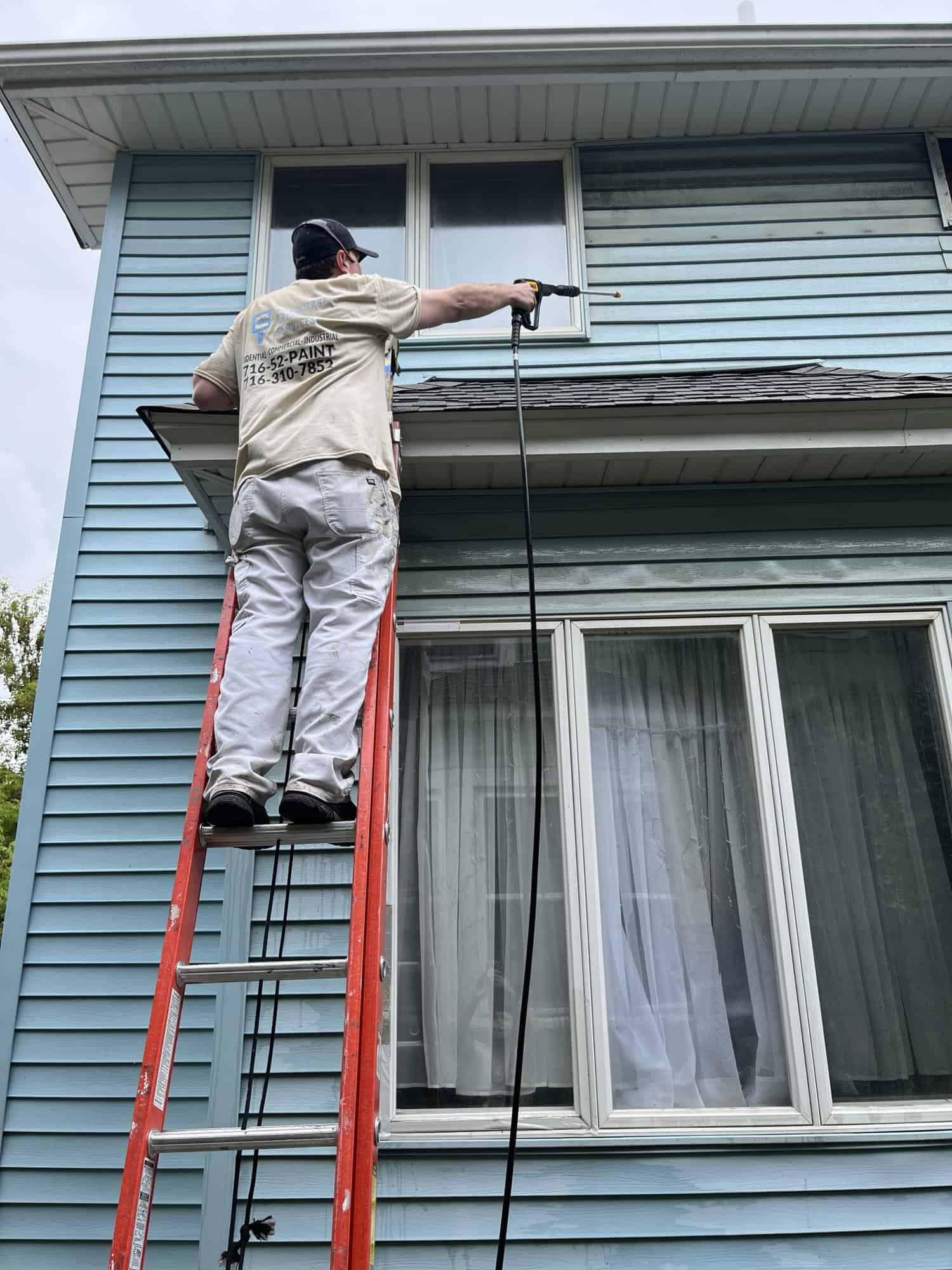
Our guide to power washing before exterior painting explains why cleaning and drying the surface are separate steps before paint is applied.
How We Plan Exterior Drying and Recoat Time
At Advantage Paint Services, we match the work schedule to the coating system and the conditions on the home. That includes checking the forecast, surface condition, product instructions, and the required time between coats.
Our current Clarence and exterior service pages list licensed and insured service, screened painters, daily communication, PCA membership, OSHA certification, EPA Lead-Safe certification, and free estimates.
For exterior house painting in Clarence and the Greater Buffalo area, see our exterior house painting services.
Frequently Asked Questions
Is exterior paint dry as soon as it feels dry to the touch?
No. Dry to touch is only one stage. Recoat time, rain resistance, and full cure can occur later and should be checked for the exact product.
How soon can a second coat of exterior paint be applied?
Use the recoat time listed for the selected coating. Weather, surface temperature, humidity, and application thickness can extend that timing.
Can fresh exterior paint get wet after a few hours?
That depends on the product. Some coatings advertise early rain resistance, while others need a longer dry-weather window. Check the current technical data before application.
How long does exterior paint take to fully cure?
Full cure varies by coating. Do not use one universal number for every exterior paint. The product data sheet should provide the cure or return-to-service guidance.